
In my last post I discussed unbalanced combat and the terrible moments when my players’ characters almost died. This time I’m talking about the terrible moments where they did die.
I’ve killed player characters six times. Most of the deaths were terrible garbage that should have never happened. A couple of them were fantastic plot points, but most of the time it was me being a bad DM. My biggest victim is Taylor, who, across two campaigns, I’ve killed four times. Two of them were the same character.
Second level characters shouldn’t be in deathly situations.
If your players’ characters die at the beginning of the campaign at first or second level, I can almost certainly say that that’s the result of bad DMing. First and second level characters should not be fighting challenging bosses or solving puzzles that involve randomly killing you. The first two or three levels are essentially tutorial levels; if you want to jump straight into realer situations where things hang in the balance and failures have real consequences, I recommend starting the campaign at a higher level (like level 5). Else, you should be very straightforward with your players and preface your campaign by saying that right from the beginning, your beloved characters can and probably will die.
My friend Megan did the latter for her campaign, Aqua Depths. She had us all make two characters: one for the adventure hook that will probably die, and a second one that will be our long-term character.
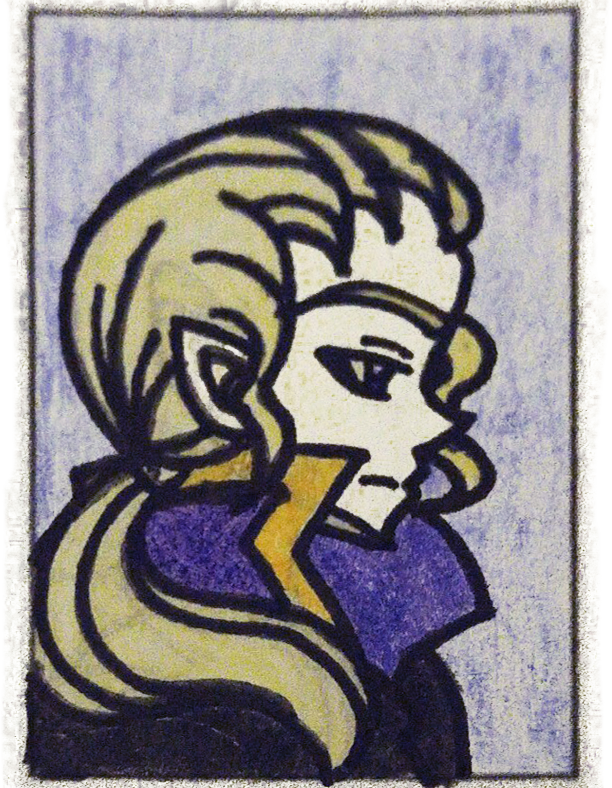
In my second session of DMing, Taylor debuted her character: Val Daerwynn, half-elven shadow sorcerer. Val had one pivotal flaw: he only had two hit points. At first level he had three, and then he lost one from levelling up—which was a bad call on my part. Official rules state that you must gain at least one hit point from levelling up, and in my own rules now I make all the players take the average amount of hit points. Dice rolls no longer have any impact on maximum HP, so all characters are fundamentally equal. If I’d made him take average HP then, Val would have had four hit points at second level. That’s still practically none, but in other words, it’s double the HP he actually had.
Now, I still had my problem with running adventures exactly as written, so when the players came up to an altar that could potentially kill them instantly, I made no adjustments. The altar cursed Val to go aggro on his party members, and the party killed him with one hit. Bye-bye Val. Taylor was okay with it—she was sad, but she accepted it. She didn’t realize what was coming for her.
Player characters should not die from a stupid encounter that you misbalanced.
In keeping with my difficulty balancing combat and straying from prewritten modules, I assumed a fight with six ghouls would be fine for three fifth level characters. I never even read their stat blocks. My brain went, “Ah, ghouls. Should be easy. Wizards wouldn’t put them here if they weren’t.” (Honestly, any time I fight ghouls in video games, they are always way more challenging then I think they should be. Why aren’t they susceptible to fire? They’re just a pile of rotten flesh!)

By the time I realized that they were all going to die and I needed to do something about it, it was too late. Kelly (Carrion) was crying because Carrion’s long lost sister, Faith, just died, and Taylor (Elymas) was pissed the fuck off. I had the other half of the split party finally hear what was going on and travel to investigate, and they managed to save Carrion and defeat the rest of the ghouls. But I had one pissed off player and one crying player. I was such a terrible DM, and I knew it. I had to rectify this.
None of the player characters were high enough level for resurrection magic—although, actually, with retrospect … Gulrot, the dwarven cleric (who I was controlling because his player wasn’t there), could cast revivify. I could have just given him diamonds as the DM. I controlled him; for all the players knew, he always had them ….
Alas, that is not the solution I came up with. I decided to have the party spend a month travelling to the nearest big city to get to a church to resurrect the fallen. And I also decided to try out a more challenging on-the-spot-homebrew version of resurrection. These resurrections sucked. They took the entire session. I put my players on the spot to say meaningful things about people they knew nothing about, and there were so many tedious dice rolls. One of my players quit the campaign after this, since her whole experience was me murdering people and fucking around.
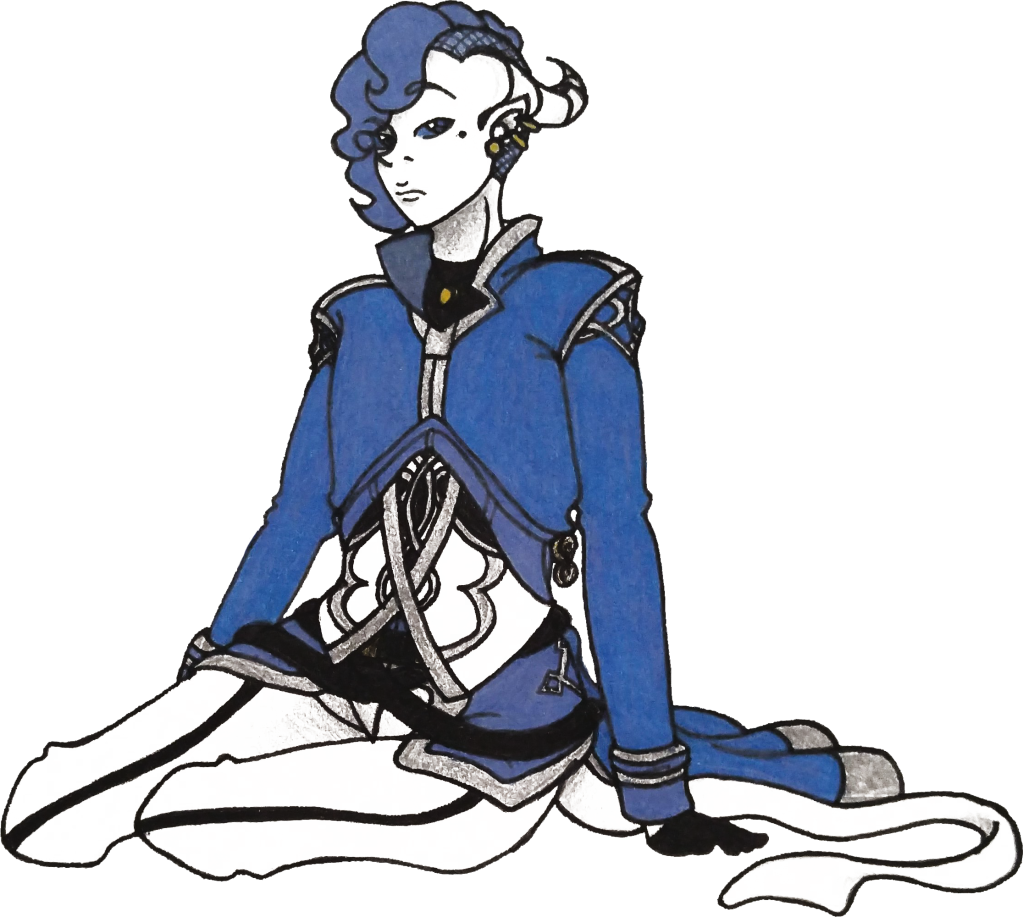
Taylor, however, gave me a second chance. And, honestly, I didn’t blow it. Elymas’s second death was kind of her fault: he jumped into a mysterious sinkhole all alone and investigated the area. All alone. And then almost out ran the foes. Almost.
This is the part where I fucked up: I realized Elymas was on death’s door, so I decided that fellow PC Kyrai was loitering outside the hole and heard something suspicious going on. So his sweet player, Elinor, had her beloved blue tiefling jump into the hole. Before Kyrai really got a chance to help Elymas, Elymas was struck down with a final blow. And then … Kyrai—who was only there because I encouraged it—decided to press forward to retrieve Elymas’s body. He picked Elymas up, turned to flee, and got struck down in the back by an arrow.
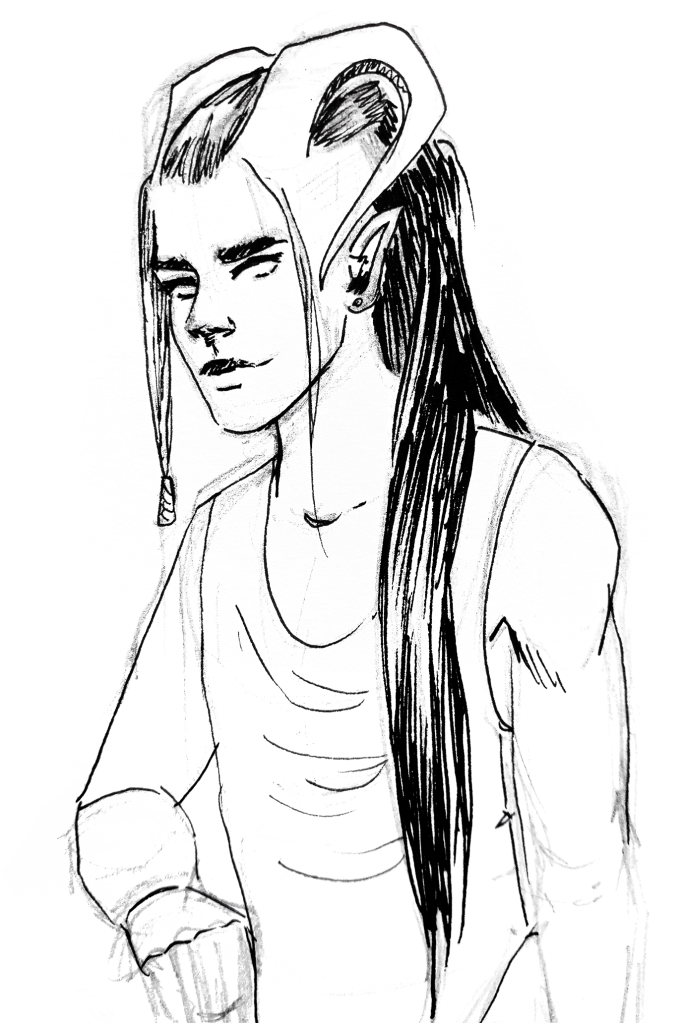
I … the terrible DM, essentially killed Kyrai in my attempt to not kill Elymas. Elinor forgave me and brought in a new character, but Taylor … Taylor was pissed off. She loved Elymas—he was the coolest character she ever made—and I killed him twice. She quit the campaign, and I was down to just two players. At that moment, I made it my life’s mission to never kill Taylor again—and it worked … fOr A wHiLe.
Total party kill.
My D&D group started a hiatus in the summer of 2018. I finally took the initiative to revive Edge in March of 2019, and had some fun wild adventures for my players that I think they enjoyed. And most importantly: no one randomly died from my poor combat balancing. I’d spent my hiatus time reading all the D&D sourcebooks and absorbing good DM skills through osmosis, and it seemed to really pay off.
Taylor’s replacement character for Val, a kenku rogue named Scratcher, had been a pretty spur of the moment insertion. She wasn’t particularly invested in him at all and confessed to me that she was starting to get sick of him just burning things all the time. I wrote him a special personal quest that would have the outcome of him dying, or retiring, or continuing as her player character, so Taylor could choose what she wanted to do with him—but that quest never came to pass.
The main plot of Edge really started when Waterdeep—the party’s base city—was consumed by a void. This void consumed everything which entered it—including the ocean that rapidly poured in from the coast. Everyone who was in Waterdeep was dead. The mages organizing the ocean-relief effort warned the party that entering the void was dying.
The party members said, “Oh I don’t believe it unless I see it. I want to go into the void.”
I said, “Are you sure?“
They said, “Yes.”
Scratcher jumped in first with the party’s other kenku and immediately died. Merciful DM I am, I let him keep his sending stone (all his other equipment was destroyed), since he’d swallowed it and it was inside his body. He used his sending stone to talk to the living party members—and this gave those party members the impression that Scratcher was not dead. The other two present players proceeded to jump in, and there I had it: a total party kill.
Now, because the Edge of Evil is an epic and melodramatic campaign with an overarching plot involving planes of existence and dimensions and stuff, it wasn’t at all out of place for me to write an adventure that allowed the dead characters to come back to life. TPK undone! Almost. I gave all the players with dead characters the choice of going on the quest to return to life or making a new character; Taylor chose to make a new one.
I don’t always suck.
My most recent player character’s death was amazing. And I owe all of it to my wonderful players: Gabe, Megan, and Darius. That was the best session I’ve ever had the honour of DMing.
Gabe’s character, Bobbie the kenku sorcerer, died when he jumped into the Waterdeep Void. Megan’s character, Canaria the half-orc cleric, used divine magic to resurrect him—but the magic was beyond her. The spell made a new body for Bobbie, but in order to properly connect his soul, they had to go inside his brain.
Immediately upon awaking inside his brain, the party discovered a tiny bird (who was Bobbie’s soul—but they didn’t know that). Bobbie chucked the tiny bird into a spiked pit and immediately died.
Bobbie derailed the entire session right at the beginning, and it was amazing.
I just sat there, exasperated. “I guess the session’s … done.”
But Megan kept going.

“I want to find a dog,” she said. “Are there any dogs nearby?”
Canaria and Airenommeron—Darius’s gnomish wizard—went to one of the neighbours’ houses, stealthed into the yard, and abducted the friendliest golden retriever.
Airenommeron burnt the dog to a crisp, and Canaria used more divine magic to bind this poor, good doggo’s soul to Bobbie’s body. They popped back into Bobbie’s brain and finished the quest I’d planned. Megan saved my session—and also made Gabe’s new character: a golden retriever in his old character’s body. Woof!
What to take away from this?
Character deaths should be plot-driven and exciting. The sadness should stem from a love of the character and a sorrow for the consequences of this character no longer being alive—not from rage toward the DM. Character deaths should be meaningful.
If it looks like one of the players’ characters is going to die, and they really shouldn’t (like a couple sessions ago when my players were fighting some snakes), then you need to do something to prevent them from dying. The worst case scenario should be that you spontaneously combust a snake because you fucked up, and not that a player character died because you fucked up. You’re a shitty DM either way, but the players will forget about the former much more easily.
If this death would be realistic and a good plot point, don’t do anything. Let the chance of dice dictate, and however it ends up, you have a great story. (And maybe a PC who is a literal dog in the body of a bird-man.)
Do you have any tales of deaths both terrible and fantastic? Please share them in the comments!
 Delayed Blast Fireball
1 thought on “A Chronicle of Player Character Deaths”